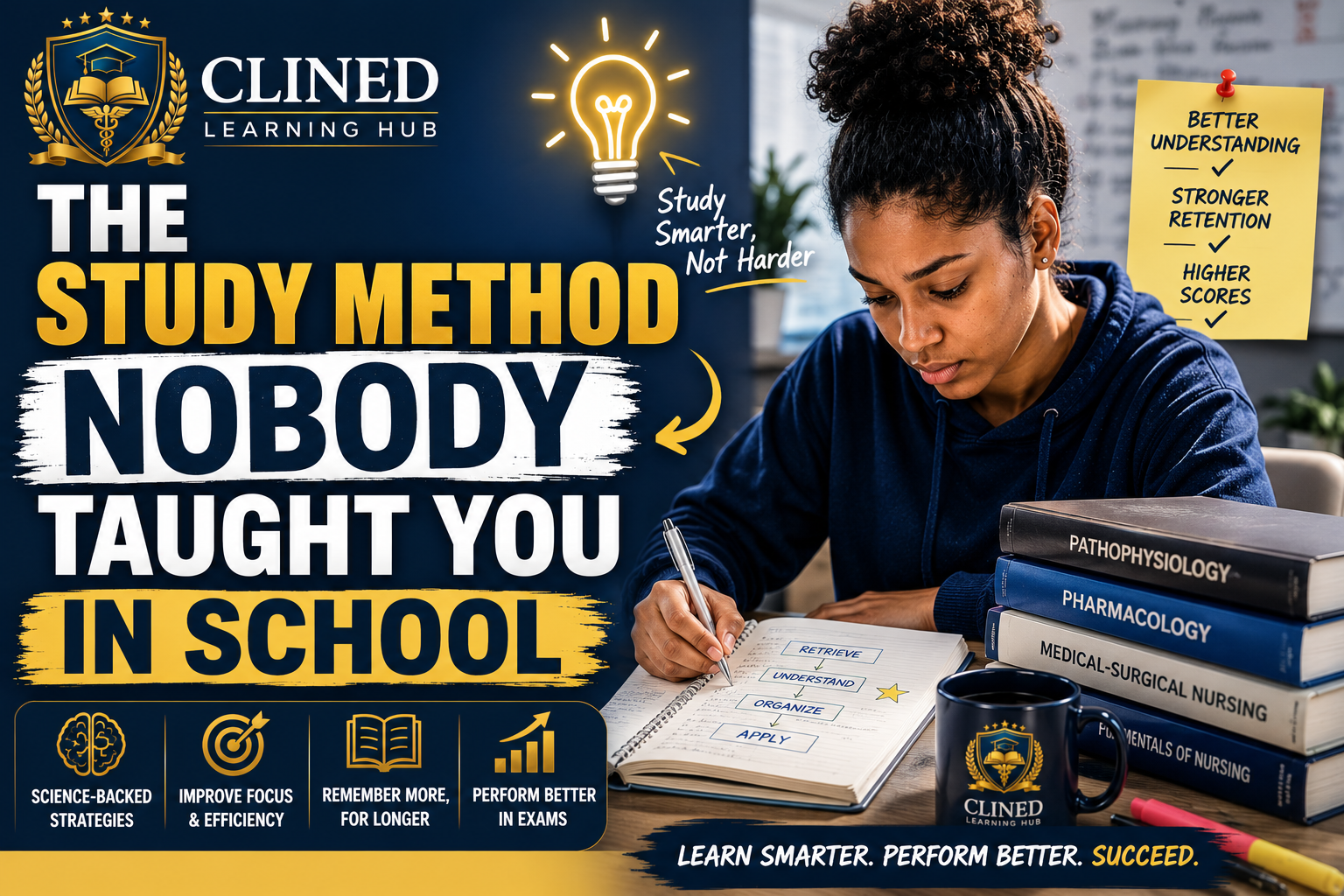
Many intelligent students struggle with exams despite studying hard. Discover the hidden reasons smart students fail and practical strategies to improve academic performance.
Over the years, I have worked with many students who were hardworking, disciplined, and genuinely committed to their education.
They attended classes regularly, purchased recommended textbooks, completed assignments, and spent countless hours studying.
Yet many of them continued to struggle academically.
One conversation with a student stands out in particular.
After receiving disappointing examination results, she looked at me and said:
"I don't understand. I studied every day. What else am I supposed to do?"
It was an honest question.
The reality is that most students are never taught how to study.
Schools teach subjects.
Lecturers teach course content.
Textbooks provide information.
But very few students receive formal instruction on how learning actually works.
As a result, many spend years using study techniques that feel productive but produce poor results.
This is why many students do not fail because they are lazy.
They fail because nobody taught them how to study.
The Problem With Traditional Studying
Ask ten students how they prepare for examinations and you will often hear similar answers:
-
I read my notes repeatedly.
-
I highlight important points.
-
I copy notes into another notebook.
-
I stay up late reading before exams.
-
I read each chapter several times.
While these activities may seem helpful, research and experience consistently show that they are among the least effective ways to learn.
The problem is simple.
Reading creates familiarity.
Learning requires retrieval.
There is a huge difference between recognizing information and being able to recall it when you need it.
Examinations test recall.
Clinical practice tests recall.
Professional competence depends on recall.
Unfortunately, many students spend most of their study time simply recognizing information rather than retrieving it.
The Four-Step Study Method Most Students Never Learn
The most effective study method is surprisingly simple.
I call it:
Read → Recall → Review → Repeat
Let's examine each step.
Step 1: Read for Understanding
Begin by reading the material carefully.
Your objective at this stage is not memorization.
Your objective is understanding.
Ask yourself:
-
What is this topic about?
-
Why is it important?
-
How does it relate to what I already know?
-
How might this appear in an examination or clinical setting?
Focus on understanding concepts rather than memorizing sentences.
For example, a nursing student studying heart failure should understand why symptoms occur rather than simply memorizing a list of symptoms.
Step 2: Recall Without Looking
This is where real learning begins.
After reading a section, close your textbook.
Put away your notes.
Then try to explain the topic from memory.
Write down everything you can remember.
Speak aloud as though you are teaching another student.
Create a quick summary without looking at the source material.
At first, this feels difficult.
That is exactly why it works.
Every time your brain retrieves information, the memory becomes stronger.
Step 3: Review the Gaps
Now compare your recalled information with the original material.
Ask:
-
What did I remember correctly?
-
What did I forget?
-
What did I misunderstand?
Many students discover that they remember far less than they initially believed.
This is not failure.
This is feedback.
The gaps you identify become the areas that require additional attention.
Step 4: Repeat Over Time
One review session is rarely enough.
Learning strengthens when information is revisited repeatedly over time.
This principle is known as spaced repetition.
Instead of studying a topic once for three hours, study it for shorter periods across several days or weeks.
For example:
-
Day 1: Learn the topic
-
Day 3: Review the topic
-
Day 7: Test yourself again
-
Day 14: Perform another review
-
Day 30: Complete a final review
Each review strengthens memory and improves retention.
Why This Method Works
Many traditional study techniques create an illusion of learning.
You read a page several times and begin to feel familiar with the content.
However, familiarity is not the same as mastery.
The Read → Recall → Review → Repeat method works because it forces your brain to actively retrieve information.
Retrieval strengthens memory pathways and improves long-term retention.
This is the same reason athletes improve through practice rather than observation.
Watching football does not make someone a better footballer.
Similarly, reading notes repeatedly does not automatically improve academic performance.
Learning requires active participation.
Common Mistakes Students Make
Studying for Hours Without a Plan
Long study sessions do not guarantee results.
A focused one-hour session is often more productive than four hours of distracted reading.
Highlighting Everything
If everything is highlighted, nothing is important.
Use highlighting sparingly and focus on understanding.
Waiting Until Examination Week
Cramming creates stress and weak retention.
Effective learning begins long before examination season arrives.
Avoiding Practice Questions
Many students read extensively but rarely test themselves.
Practice questions help convert knowledge into examination performance.
How Healthcare Students Can Apply This Method
Healthcare education demands more than memorization.
Students must understand concepts well enough to apply them in real-life situations.
For example:
Instead of memorizing the signs of shock, ask:
-
Why does shock occur?
-
What happens to the body's organs?
-
What assessment findings would I expect?
-
What nursing interventions would be required?
This approach promotes deeper understanding and improves both examination and clinical performance.
Key Takeaways
If you have been studying hard but not seeing the results you want, the problem may not be your effort.
The problem may be your method.
Remember these four steps:
-
Read for understanding.
-
Recall from memory.
-
Review your mistakes.
-
Repeat over time.
These simple steps can transform the way you learn.
Final Thoughts
One of the biggest misconceptions in education is that successful students are simply born smarter.
In reality, many high-performing students have simply learned how to learn.
The good news is that effective study skills can be developed by anyone.
You do not need a higher IQ.
You do not need perfect memory.
You do not need to spend every waking hour studying.
You simply need a study method that works.
And once you learn how to learn, everything else becomes easier.
About ClinEd Learning Hub
ClinEd Learning Hub helps healthcare students and professionals achieve academic excellence, clinical competence, and career success through practical learning resources, mentorship, and professional development opportunities.
Visit clinedlearninghub.com for more strategies to help you study smarter, perform better, and succeed with confidence.